Keeping your teeth clean helps prevent cavities and gum disease, and it helps your breath stay fresh. Clean teeth also make it easier for your dentist to spot small problems before they become bigger ones. A few simple habits, done every day, make the biggest difference.
Brush at least twice a day, clean between your teeth once a day, and drink water through the day — especially after eating or drinking something sweet or acidic. Try to limit sugary snacks and drinks, and do not use tobacco products, which harm your teeth and gums. See your dentist regularly for checkups and cleanings, even when nothing hurts. If you notice bleeding gums, tooth pain, or a sore that does not heal, call us at 718-584-9777.
Morning: Brush for two minutes with fluoride toothpaste. Brush all sides of every tooth, and brush your tongue gently. Clean between your teeth once a day with floss or an interdental cleaner — this reaches spots your brush cannot.
How to brush: Use a soft-bristled brush and fluoride toothpaste. Hold the brush at a 45-degree angle to the gumline and use short, gentle, circular strokes on all sides of every tooth. Brush for two full minutes, twice a day, and brush your tongue gently. Replace your brush when the bristles are frayed.
How to floss: Use about 18 inches of floss, winding most of it around your middle fingers. Gently slide the floss between teeth and curve it into a C-shape against each tooth, sliding it just below the gumline. Use a clean section of floss for each tooth. If floss is difficult, ask us about interdental brushes or a water flosser.
Diet and tooth decay: Bacteria in plaque feed on sugars and starches and produce acid that weakens enamel. Frequent snacking and sipping sugary or acidic drinks keep acid on your teeth longer. Limit sugary snacks and drinks, choose water, and wait about 30 minutes after eating or drinking something acidic before brushing.
Checkups every six months: Come in for a checkup and cleaning about every six months, even when nothing hurts. Regular visits let us catch cavities and gum disease early, when treatment is simpler.
During the day: Drink water, especially after meals and snacks. If you drink soda, juice, or coffee, rinse with water afterward. Try to limit sugary and acidic foods and drinks.
Evening: Brush again for two minutes before bed. If your dentist has recommended a mouth rinse, use it as directed. Replace your toothbrush every three to four months, or sooner if the bristles are worn.
These steps follow general guidance from the American Dental Association (ADA). Your dentist may adjust them for your needs — please ask us at your next visit.
Your natural teeth are worth protecting. Most tooth loss is preventable with daily care and regular dental visits.
Treat problems early: Do not ignore tooth pain, bleeding gums, loose teeth, or a cracked tooth. Early treatment is often simpler and gives the tooth a better chance of being saved. If a filling, crown, or root canal is recommended, ask us what it will involve and what to expect.
Protect your teeth: Wear a mouthguard for contact sports. Do not use your teeth to open packages, crack nuts, or chew ice or hard objects. If you grind your teeth at night, ask us about a night guard.
If a tooth is knocked out: Time matters. Hold the tooth by the crown (not the root), keep it moist — in milk, or in your mouth next to your cheek — and call us at 718-584-9777 or seek dental care right away. Do not scrub the tooth or let it dry out.
Care for your gums: Gum disease is a leading cause of tooth loss in adults. Daily brushing and cleaning between teeth, plus regular professional cleanings, help keep your gums healthy and your teeth in place.
The tips on this page are general information based on guidance from the American Dental Association (ADA). They do not replace advice from your dentist. If you have questions about your teeth or gums, please call us at 718-584-9777 or schedule a visit.
Healthy gums and overall health: Your gums do more than hold your teeth in place. Gum disease (periodontal disease) causes chronic inflammation, and research links it to a higher risk of heart disease, diabetes complications, and problems during pregnancy. Brushing, flossing, and regular checkups protect your gums and support your overall health. If your gums bleed, feel swollen, or pull away from your teeth, contact us promptly.
Trusted resources: Learn more from the American Dental Association's MouthHealthy site at https://www.mouthhealthy.org and the Centers for Disease Control and Prevention's Oral Health pages at https://www.cdc.gov/oral-health/ . We recommend these sources for plain-language guidance on brushing, flossing, gum disease, and more.
Ready for your next visit? We recommend a checkup and cleaning about every six months. Contact us for an appointment — call 718-584-9777 or use the Find Out More button to reach our Contact Us page.
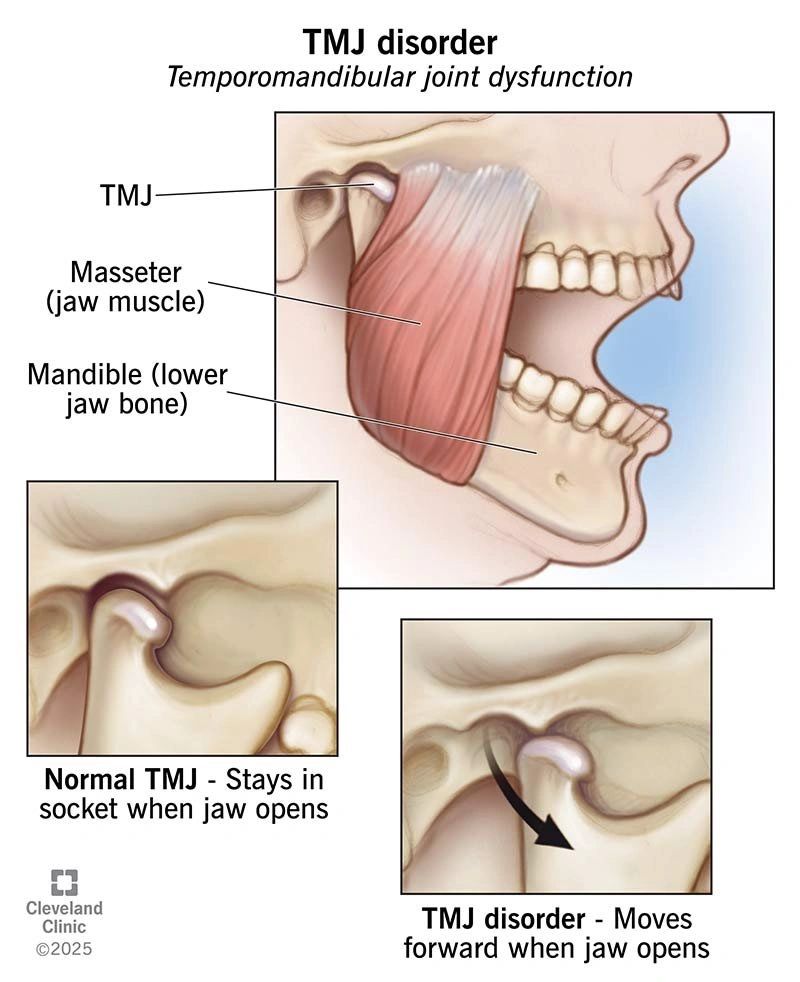
Grinding or clenching your teeth — often at night — can strain the jaw joint and muscles, causing jaw pain, headaches, worn or cracked teeth, and jaw stiffness. A custom night guard from your dentist can protect your teeth and ease strain on the joint. If you wake with jaw soreness, headaches, or clicking in the jaw, tell us at your next visit or call 718-584-9777.
Illustration: A healthy temporomandibular joint (TMJ) on the left compared with TMJ disorder on the right.
Illustration credit: Cleveland Clinic ©2025.
Common causes: Most bad breath starts in the mouth. Bacteria on the tongue, between teeth, and below the gumline release odors, especially when food particles remain after eating. Gum disease, cavities, and a dry mouth can also cause bad breath. Garlic, onions, coffee, and tobacco are common temporary causes. In some cases, bad breath can be related to sinus drainage, acid reflux, or other medical conditions.
Daily care and prevention: Brush twice a day with fluoride toothpaste, clean between your teeth once a day, and gently brush your tongue, where odor-causing bacteria collect. Drink water through the day to help prevent dry mouth, and rinse after eating. Limit sugary snacks and drinks, and avoid tobacco. Mouthwash can freshen breath, but it does not treat the cause — daily cleaning and regular checkups matter most.
When to contact our office: If bad breath does not improve with daily cleaning, or if it comes with bleeding or swollen gums, a bad taste that will not go away, a sore that does not heal, or a loose tooth, call us at 718-584-9777. We can check for gum disease, cavities, and dry mouth, and help find the cause. Regular checkups and cleanings about every six months also help keep your breath fresh.


Copyright © 2026 All Family Dental Care PC - All Rights Reserved. | info@allfamilydentalpc.com
We use cookies to analyze website traffic and optimize your website experience. By accepting our use of cookies, your data will be aggregated with all other user data.